


|
|
books
| book details |
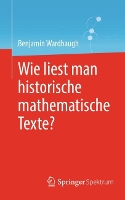
Wie liest man historische mathematische Texte?
By (author) Benjamin Wardhaugh, Translated by Thomas Morel
|
| on special |
normal price: R 954.95
Price: R 907.95
|
| book description |
Werke von früheren und wichtigen Mathematikern sind faszinierend. Sie weisen aber eine ganz andere Sprache und Notation auf, als wir sie heute kennen. In diesem Buch bietet Benjamin Wardhaugh einen Leitfaden für die Entschlüsselung solcher Texte, indem er die Fragen aufzeigt, die ihren Sinn und ihre Bedeutung erschließen: Wer hat den Text geschrieben? Für welches Publikum und mit welchem Ziel? Wie ist er zu seiner heutigen Form gelangt? Warum ist er heute noch relevant? Anhand zahlreicher konkreter Beispiele – von Fermat, Newton und Lagrange, um nur einige zu nennen – lehrt dieses Buch, historische Texte kritisch zu verstehen und zu analysieren. Es enthält Zusammenfassungen in Kästen, viele Literaturhinweise und ist ideal für Studierende und Lehrkräfte.
| product details |

Normally shipped |
Publisher | Springer Fachmedien Wiesbaden
Published date | 4 Nov 2024
Language | German
Format | Paperback / softback
Pages | 113
Dimensions | 203 x 127 x 0mm (L x W x H)
Weight | 0g
ISBN | 978-3-6627-0309-0
Readership Age |
BISAC | mathematics / history & philosophy
| other options |

Normally shipped |
Readership Age |
Normal Price | R 1 195.95
Price | R 1 136.95
| on special |
|
|
To view the items in your trolley please sign in.
| sign in |
|
|
|
| specials |
|
This is indeed a story of mercy and the redemption it offers.
|
Emil Coetzee, a civil servant in his fifties, is washing blood off his hands when the ceasefire is announced.
|
An epic love story with the pulse of a thriller that asks: what would you risk for a second chance at first love?
|
|
|
|
