


|
|
books
| book details |
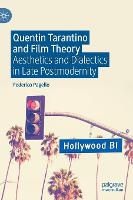
Quentin Tarantino and Film Theory: Aesthetics and Dialectics in Late Postmodernity
By (author) Federico Pagello
|
| on special |
normal price: R 3 414.95
Price: R 3 073.95
|
| book description |
This book examines a set of theoretical perspectives that critically engage with the notion of postmodernism, investigating whether this concept is still useful to approach contemporary cinema. This question is explored through a discussion of the films written and directed by Quentin Tarantino, largely regarded as the epitome of postmodern cinema and considered here as theoretical contributions in their own right. Each chapter first presents key ideas proposed by a specific theorist and then puts them in conversation with Tarantino’s films. Jacques Rancière’s theory of art is used to reject postmodernism’s claims about the ‘death’ of the aesthetic image in contemporary cinema. Fredric Jameson’s and Slavoj Žižek’s dialectical thinking is mobilized to challenge simplistic, ideological readings of postmodern cinema in general, and Tarantino’s films in particular. Finally, the direct influence of Carol Clover’s psychoanalytical approach to the horror genre on Tarantino’s work isdiscussed to prove the director’s specific contribution to a theoretical understanding of contemporary film aesthetics.    Â
| product details |

Normally shipped |
Publisher | Springer Nature Switzerland AG
Published date | 21 Oct 2020
Language |
Format | Hardback
Pages | 210
Dimensions | 210 x 148 x 0mm (L x W x H)
Weight | 0g
ISBN | 978-3-0304-3818-0
Readership Age |
BISAC | performing arts / film & video / direction & production
| other options |

Normally shipped |
Readership Age |
Normal Price | R 4 229.95
Price | R 3 806.95
| on special |
|
|
To view the items in your trolley please sign in.
| sign in |
|
|
|
| specials |
|
|
Mason Coile
Paperback / softback
224 pages
was: R 520.95
now: R 468.95
|
A terrifying locked-room mystery set in a remote outpost on Mars.
|
|
|
An epic love story with the pulse of a thriller that asks: what would you risk for a second chance at first love?
|
|
|
|
