


|
|
|
books
| book details |
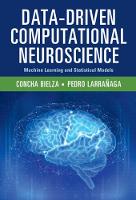
Data-Driven Computational Neuroscience: Machine Learning and Statistical Models
By (author) Concha Bielza, By (author) Pedro Larrañaga
|
| on special |
normal price: R 3 849.95
Price: R 3 657.95
|
| book description |
Data-driven computational neuroscience facilitates the transformation of data into insights into the structure and functions of the brain. This introduction for researchers and graduate students is the first in-depth, comprehensive treatment of statistical and machine learning methods for neuroscience. The methods are demonstrated through case studies of real problems to empower readers to build their own solutions. The book covers a wide variety of methods, including supervised classification with non-probabilistic models (nearest-neighbors, classification trees, rule induction, artificial neural networks and support vector machines) and probabilistic models (discriminant analysis, logistic regression and Bayesian network classifiers), meta-classifiers, multi-dimensional classifiers and feature subset selection methods. Other parts of the book are devoted to association discovery with probabilistic graphical models (Bayesian networks and Markov networks) and spatial statistics with point processes (complete spatial randomness and cluster, regular and Gibbs processes). Cellular, structural, functional, medical and behavioral neuroscience levels are considered.
| product details |

Normally shipped |
Publisher | Cambridge University Press
Published date | 26 Nov 2020
Language |
Format | Hardback
Pages | 708
Dimensions | 259 x 185 x 43mm (L x W x H)
Weight | 1490g
ISBN | 978-1-1084-9370-3
Readership Age |
BISAC | computers / computer vision
| other options |

Normally shipped |
Readership Age |
|
|
|
To view the items in your trolley please sign in.
| sign in |
|
|
|
| specials |
|

|
Mason Coile
Paperback / softback
224 pages
was: R 520.95
now: R 468.95
|
A terrifying locked-room mystery set in a remote outpost on Mars.
|
An epic love story with the pulse of a thriller that asks: what would you risk for a second chance at first love?
|
|
|
|
|
|
