


|
|
books
| book details |
Representing Space in the Scientific Revolution
By (author) David Marshall Miller
|
| on special |
normal price: R 1 484.95
Price: R 1 410.95
|
| book description |
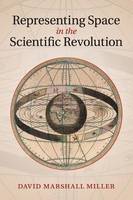
The novel understanding of the physical world that characterized the Scientific Revolution depended on a fundamental shift in the way its protagonists understood and described space. At the beginning of the seventeenth century, spatial phenomena were described in relation to a presupposed central point; by its end, space had become a centerless void in which phenomena could only be described by reference to arbitrary orientations. David Marshall Miller examines both the historical and philosophical aspects of this far-reaching development, including the rejection of the idea of heavenly spheres, the advent of rectilinear inertia, and the theoretical contributions of Copernicus, Gilbert, Kepler, Galileo, Descartes, and Newton. His rich study shows clearly how the centered Aristotelian cosmos became the oriented Newtonian universe, and will be of great interest to students and scholars of the history and philosophy of science.
| product details |

Normally shipped |
Publisher | Cambridge University Press
Published date | 15 Sep 2016
Language |
Format | Paperback / softback
Pages | 250
Dimensions | 228 x 152 x 14mm (L x W x H)
Weight | 370g
ISBN | 978-1-1076-2471-9
Readership Age |
BISAC | science / philosophy & social aspects
| other options |

Normally shipped |
Readership Age |
Normal Price | R 1 770.95
Price | R 1 681.95
| on special |
|
|
To view the items in your trolley please sign in.
| sign in |
|
|
|
| specials |
|
Emil Coetzee, a civil servant in his fifties, is washing blood off his hands when the ceasefire is announced.
|
This is indeed a story of mercy and the redemption it offers.
|
An epic love story with the pulse of a thriller that asks: what would you risk for a second chance at first love?
|
|
|
|
