


|
|
books
| book details |
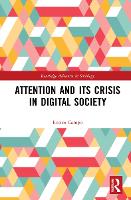
Attention and its Crisis in Digital Society
By (author) Enrico Campo
|
| on special |
normal price: R 2 437.95
Price: R 2 315.95
|
| book description |
In the context of debates surrounding the effects of new technologies on our mental faculties, particularly the attention span, this volume addresses the notion of a deterioration of attention, and the related ideas of cognitive overload, an inability to concentrate, and attention deficit disorder. Through a new conceptualization of attention based not on individualistic or universalistic approaches, but centered instead on the cultural and social variability of cognitive processes and the multiplicity of forces and environments that encourage, stimulate, and inhibit certain cognitive mechanisms, the author rejects the idea of a degradation or crisis of attention and proposes an alternative vision of the problem of attention in contemporary societies. Placing cultural conventions, social norms, and ecological environments at the forefront of our understanding of individual and collective attention, Attention and its Crisis in Digital Society will appeal to scholars of sociology, psychology, and philosophy with interests in social theory, cognitive processes, and the criticisms often levelled at digital society and new technologies.
| product details |

Normally shipped |
Publisher | Taylor & Francis Ltd
Published date | 6 Nov 2023
Language |
Format | Paperback / softback
Pages | 222
Dimensions | 234 x 156 x 0mm (L x W x H)
Weight | 660g
ISBN | 978-1-0321-2640-1
Readership Age |
BISAC | psychology / cognitive psychology
| other options |

Normally shipped |
Readership Age |
Normal Price | R 3 066.95
Price | R 2 912.95
| on special |
|
|
To view the items in your trolley please sign in.
| sign in |
|
|
|
| specials |
|
This is indeed a story of mercy and the redemption it offers.
|
Emil Coetzee, a civil servant in his fifties, is washing blood off his hands when the ceasefire is announced.
|
An epic love story with the pulse of a thriller that asks: what would you risk for a second chance at first love?
|
|
|
|
