


|
|
|
books
| book details |
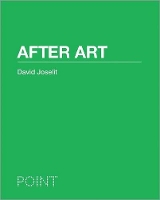
After Art
By (author) David Joselit
|
| on special |
normal price: R 1 032.95
Price: R 980.95
|
| book description |
Art as we know it is dramatically changing, but popular and critical responses lag behind. In this trenchant illustrated essay, David Joselit describes how art and architecture are being transformed in the age of Google. Under the dual pressures of digital technology, which allows images to be reformatted and disseminated effortlessly, and the exponential acceleration of cultural exchange enabled by globalization, artists and architects are emphasizing networks as never before. Some of the most interesting contemporary work in both fields is now based on visualizing patterns of dissemination after objects and structures are produced, and after they enter into, and even establish, diverse networks. Behaving like human search engines, artists and architects sort, capture, and reformat existing content. Works of art crystallize out of populations of images, and buildings emerge out of the dynamics of the circulation patterns they will house. Examining the work of architectural firms such as OMA, Reiser + Umemoto, and Foreign Office, as well as the art of Matthew Barney, Ai Weiwei, Sherrie Levine, and many others, After Art provides a compelling and original theory of art and architecture in the age of global networks.
| product details |

Normally shipped |
Publisher | Princeton University Press
Published date | 28 Oct 2012
Language |
Format | Hardback
Pages | 136
Dimensions | 184 x 152 x 0mm (L x W x H)
Weight | 255g
ISBN | 978-0-6911-5044-4
Readership Age |
BISAC | art / criticism
| other options |

Normally shipped |
Readership Age |
Normal Price | R 1 452.95
Price | R 1 380.95
| on special |
|
|
|
To view the items in your trolley please sign in.
| sign in |
|
|
|
| specials |
|
|
|
|
Mason Coile
Paperback / softback
224 pages
was: R 520.95
now: R 468.95
|
A terrifying locked-room mystery set in a remote outpost on Mars.
|
An epic love story with the pulse of a thriller that asks: what would you risk for a second chance at first love?
|
|
|
|
